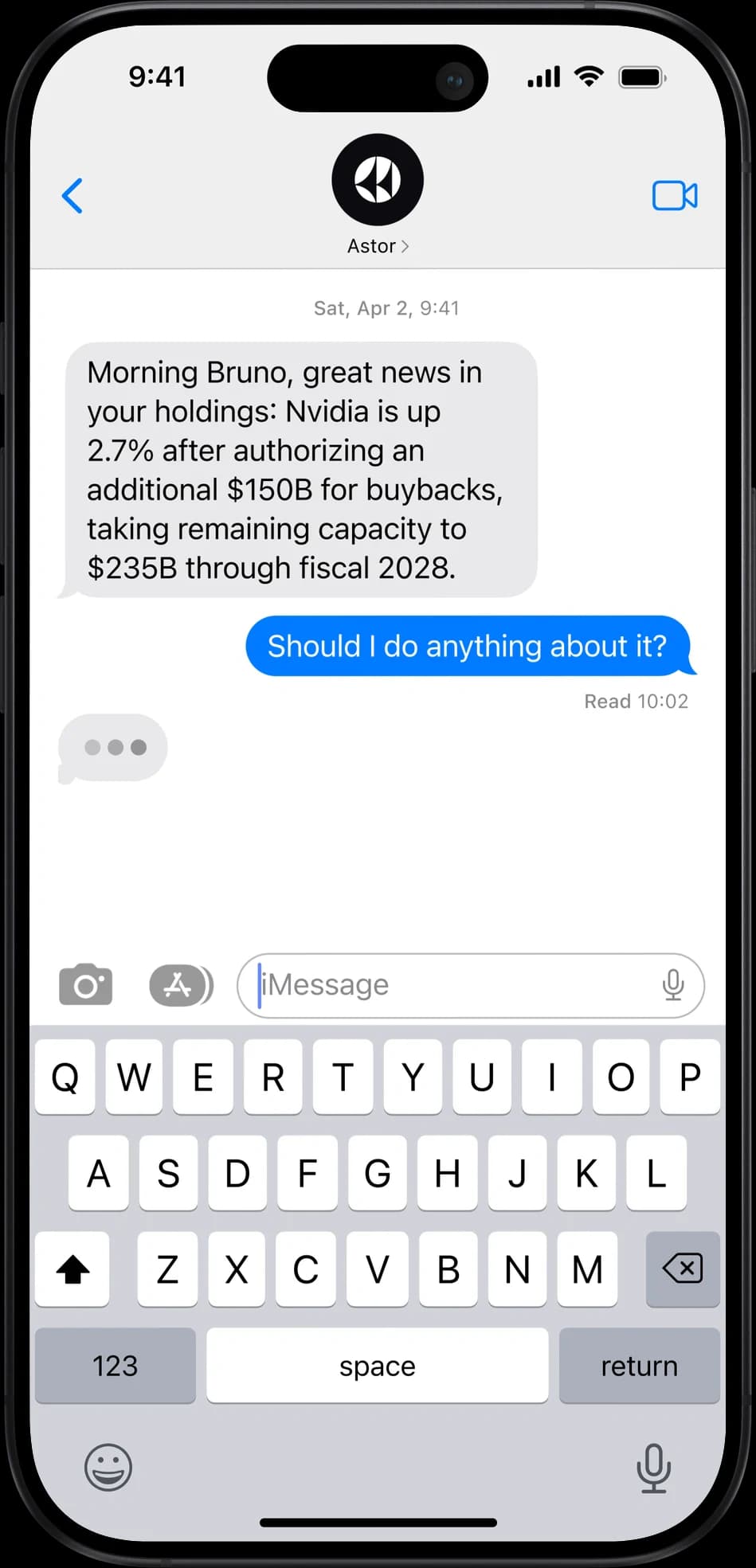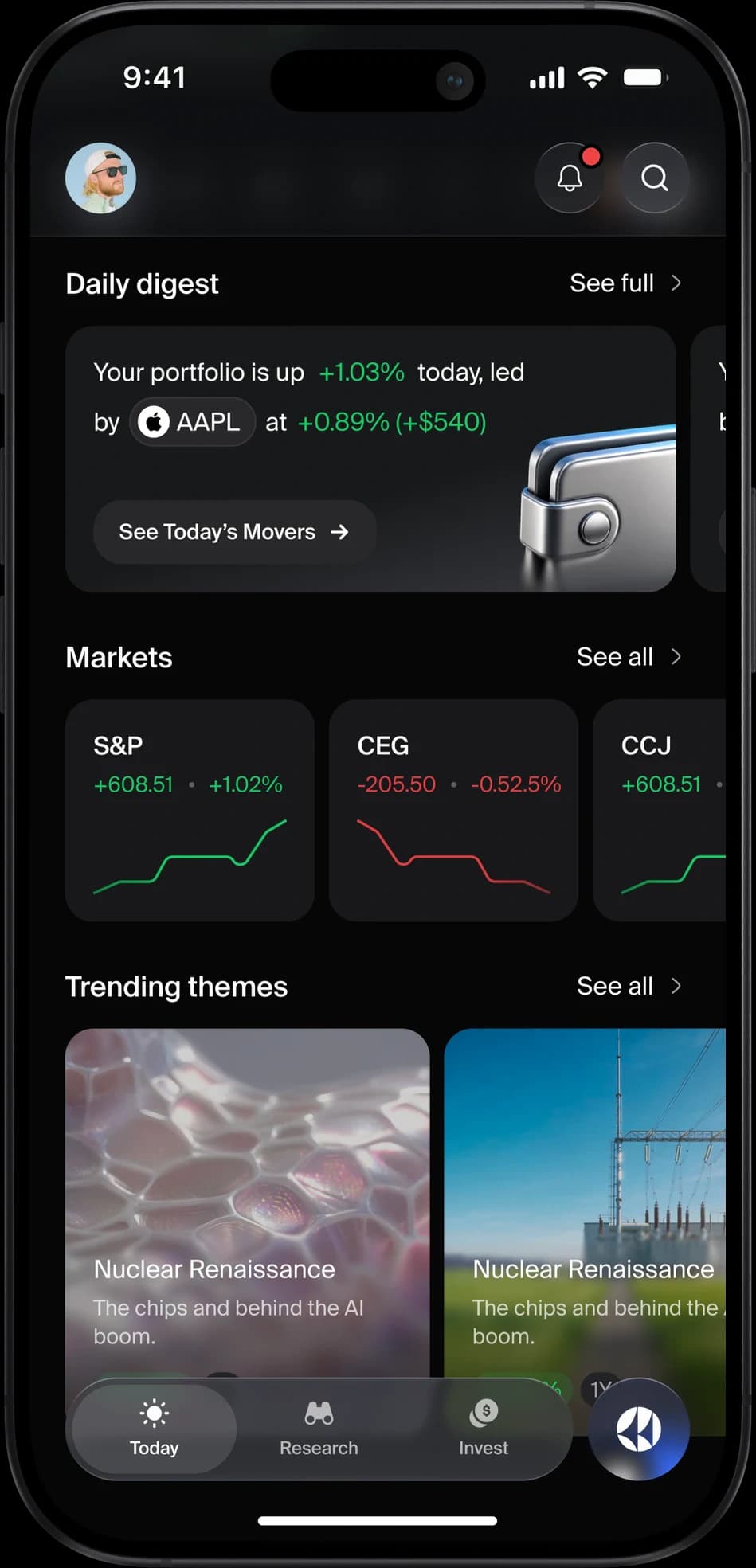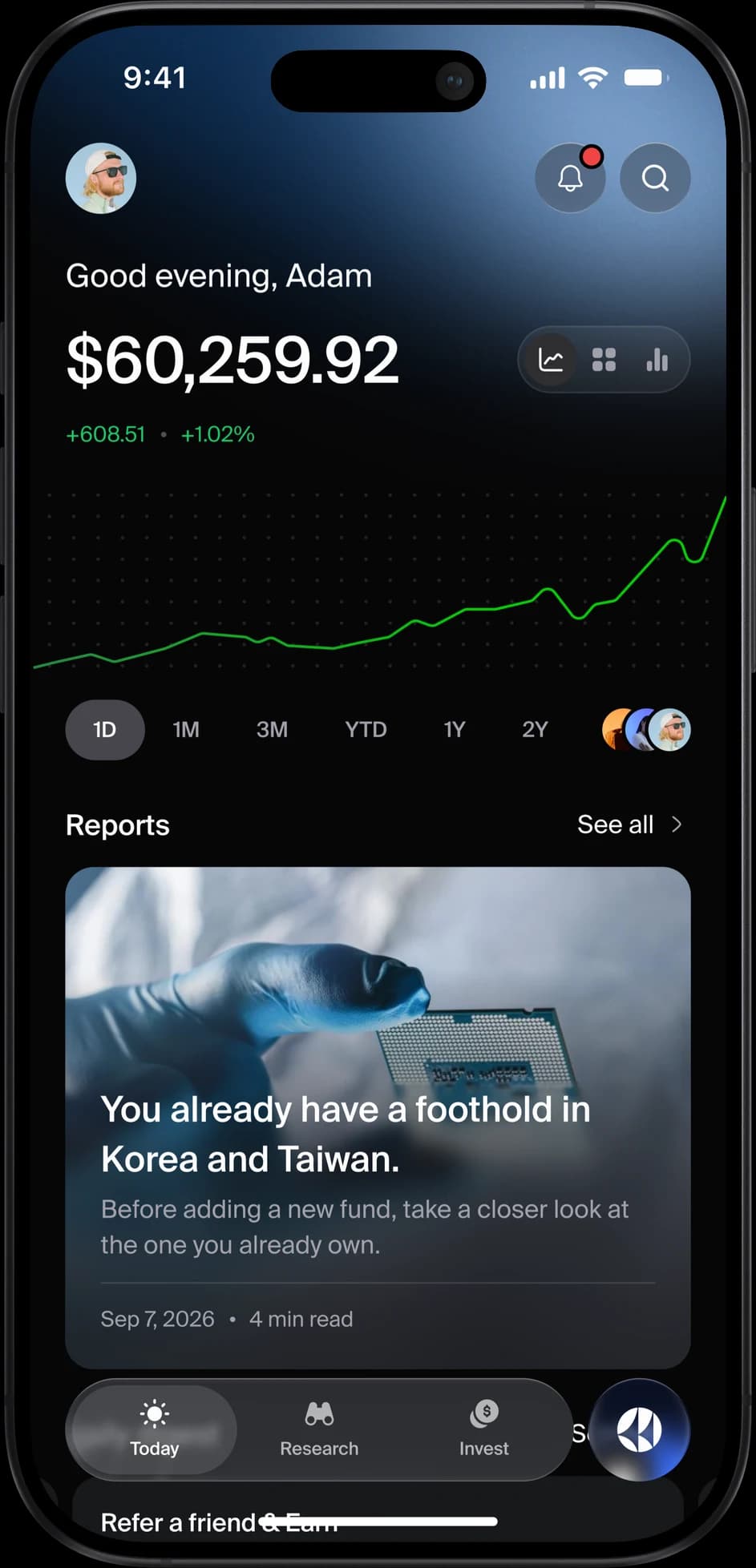
It can be, if the app uses a read-only connection through an established data network like Plaid, sends you to your broker’s own login page when your broker supports it, and handles your data the way it says it does. A read-only connection lets an app see your holdings but not trade or move money, so the questions that matter most are about your password and what happens to your data afterward. Astor, a personal investing agent and SEC-registered investment adviser, connects to your accounts through Plaid. It can see your holdings, and it can’t move money.
Here’s how these connections work, what read-only does and doesn’t protect you from, and a short list of things to check before you link any account.
How does an app connect to your brokerage account?
Most apps don’t build their own connection to every bank and broker. Instead, they use an aggregator, a company that connects to many financial institutions and passes your data to the apps you approve. Plaid is one of them.
FINRA, which oversees broker-dealers, describes two ways aggregators get your data. The first is an application programming interface (API), a prearranged agreement for the institution to send data to the aggregator. The second is screen scraping, where you give the aggregator your username and password and an automated program logs in as you to collect the data. FINRA says security experts often consider APIs the safer option.
Many API connections use OAuth, which lets you grant access without giving the app your password. With OAuth, you briefly leave the app, log in on your broker’s own website or mobile app, approve what you want to share, and get sent back. Plaid requires the apps it serves to support OAuth for US institutions, notes that many of the largest US banks require it, and says OAuth can let you choose which accounts to share.
So whether you ever type your brokerage password into a third party depends on your broker. If you’re asked for it, that’s worth knowing before you continue.
What can an app do with read-only access?
It can see. Plaid’s investments product, for example, gives apps your holdings, the securities you own and your investment transactions. That’s what lets an app tell you how much of your portfolio sits in one stock.
It can’t act. A read-only connection doesn’t let an app place trades or move money in that account. If an app ever asks for permission to trade or move money, that’s a separate grant, and it’s fair to ask why it needs it.
Read-only doesn’t mean risk-free. Your holdings, balances and transaction history are a detailed map of your finances, and that map now lives with the app as well as your broker. That’s why the rest of this guide is about how the app protects your data, how it uses it, and who holds it accountable.
What does SOC 2 Type II mean, and does it matter?
SOC 2 is an examination, done by an independent CPA firm under standards set by the AICPA, of a company’s controls relevant to security, availability, processing integrity, confidentiality or privacy. The AICPA says customers usually need information about the design, operation and effectiveness of a company’s controls to judge the risks of trusting it, and a SOC 2 report is how they get it. A Type II report means the auditor tested whether those controls actually worked over a period of time, rather than only looking at how they were designed on a single date.
It matters, with a caveat. SOC 2 Type II tells you a company has real security practices and that someone outside checked them. It isn’t a guarantee that nothing will go wrong. Many companies publish a trust center where you can see their reports or request access.
Encryption is the other basic. Plaid says it protects personal information with AES-256 and TLS. Any app you connect should be able to say the same in plain words.
Does it matter whether the app is regulated?
Yes, especially if the app gives you investment recommendations. FINRA warns that many data aggregators might operate under limited regulatory oversight and may not be subject to the same rules as registered financial institutions. Investor.gov explains that investment advisers generally must register with the SEC or with state securities authorities. The SEC, NASAA and FINRA have jointly warned investors that a lack of registration should prompt more investigation before you trust a platform.
Registration comes with specific duties. Investment advisers are required to act in your best interest, according to the SEC’s Investor.gov. Under amendments to the SEC’s Regulation S-P adopted in 2024, registered investment advisers must have an incident response program for unauthorized access to customer information, and, with limited exceptions, must notify affected customers as soon as practicable and no later than 30 days after becoming aware of a breach involving their sensitive information.
Registration isn’t an endorsement, and plenty of useful apps don’t need to register because they don’t give advice. But if an app tells you what to do with your money, you can check whether it’s registered on the SEC’s Investment Adviser Public Disclosure site in a couple of minutes. More on this in SEC-registered AI investment advisers.
Before you connect any app, check these
- Read-only access. Confirm the connection can see your accounts but can’t trade or move money in them.
- How you log in. Prefer logging in on your broker’s own page through OAuth. If the app asks for your brokerage password directly, find out who stores it and how.
- Which aggregator. Find out whether the app uses an established network like Plaid, and whether it uses APIs or screen scraping.
- Independent security review. Look for a SOC 2 Type II report or a public trust center.
- Encryption. Your data should be encrypted in transit and at rest.
- Data use. Read the privacy policy. FINRA suggests checking that the company collects only what it needs, whether it can sell your data, and how long it keeps it.
- Registration. If the app gives investment advice, look it up on the SEC’s Investment Adviser Public Disclosure site.
- Breach plan. FINRA suggests asking what happens if there’s a breach and whether you’ll be notified.
- How to leave. Know how to disconnect and whether your data is deleted. FINRA warns that deleting the app may not end its access, and Plaid offers Plaid Portal to view and cut off connections you’ve made through it.
How Astor handles your accounts
Astor connects to brokerage, retirement and crypto accounts at most major US institutions, such as Robinhood, Schwab and Coinbase, through Plaid. Astor can see your holdings through these connections, but it can’t move money. You don’t transfer anything to Astor, and your money stays where it is. ChatGPT and Perplexity also connect accounts through Plaid, and we compare them in Astor vs. ChatGPT and Astor vs. Perplexity Finance.
Astor is SOC 2 Type II compliant (see trust.astor.app). Your data is encrypted in transit and at rest, and Astor never sells your data.
Gaus, Inc. DBA Astor is an SEC-registered investment adviser (CRD #338424), so its recommendations are personalized investment advice and it owes clients a fiduciary duty. It does the research and the watching, and you make every decision.
If you use Text to Trade, launching in October 2026, the trades happen in your own Robinhood agentic account, not in your other connected accounts. You set the amount the agent can use, you review and approve every trade, and nothing is bought until you say yes. In your other connected accounts, Astor still can’t trade or move money. You can read more in introducing Text to Trade or see how Astor works.
Frequently asked questions
Is Plaid safe?
Plaid says it protects personal information with AES-256 and TLS encryption, it uses OAuth with institutions that support it so you log in on your bank or broker’s own page, and it offers Plaid Portal for viewing and ending the connections you’ve made. No connection is risk-free, so it still matters which app you connect to and how that app handles your data.
Can an app with read-only access sell my stocks?
No. A read-only connection lets an app see your holdings, balances and transactions, but not place trades or move money in that account. An app would need separate trading permission from you.
Should I ever give an app my brokerage password?
Prefer apps that send you to your broker’s own login page through OAuth, so the app never sees your password. FINRA lists cyber fraud, unauthorized transactions and identity theft among the risks of sharing financial data with aggregators, and notes that security experts often consider API connections safer than screen scraping. Some brokers don’t support OAuth yet, so if you’re asked for a password, find out who stores it and how.
How do I disconnect an app from my brokerage account?
Remove the connection inside the app, and check whether your broker lists connected apps in its settings. If the app used Plaid, you can also see and end the connection in Plaid Portal. FINRA warns that deleting the app from your phone may not be enough to end its access.
Can Astor trade or move money in my accounts?
Not in the accounts you connect. Astor connects through Plaid and can see your holdings, but it can’t move money or trade in your connected accounts. The only place trades happen is your own Robinhood agentic account if you use Text to Trade, and only after you approve each one.
Sources
- FINRA: Know Before You Share, Be Mindful of Data Aggregation Risks (January 12, 2024), accessed Oct 12, 2026
- Plaid Docs: OAuth guide, accessed Oct 12, 2026
- Plaid Docs: Investments, accessed Oct 12, 2026
- Plaid: How we handle your data, accessed Oct 12, 2026
- Plaid: End User Privacy Policy, accessed Oct 12, 2026
- AICPA & CIMA: System and Organization Controls, SOC suite of services, accessed Oct 12, 2026
- AICPA & CIMA: SOC 2 guide, Reporting on an Examination of Controls at a Service Organization, accessed Oct 12, 2026
- SEC: SEC Adopts Rule Amendments to Regulation S-P (May 16, 2024), accessed Oct 12, 2026
- Investor.gov (SEC, NASAA and FINRA): Artificial Intelligence (AI) and Investment Fraud, Investor Alert, accessed Oct 12, 2026
- Investor.gov (SEC): Investment Advisers, accessed Oct 12, 2026
- SEC Investment Adviser Public Disclosure: Astor (CRD 338424), accessed Oct 12, 2026
Important information
Gaus, Inc. DBA Astor is an SEC-registered investment adviser (CRD #338424). Registration does not imply a certain level of skill or training. Astor provides non-discretionary advice: you make every investment decision. All investing involves risk, including the loss of principal, and past performance does not guarantee future results. Astor uses AI, which can make mistakes. This article is general information, not individualized investment, tax or legal advice. See our disclosures.
About comparisons
Information about other companies comes from their public websites and filings as of October 2026 and may have changed since; check each provider for current details. Comparisons and rankings reflect Astor’s opinion. Other companies’ names and trademarks belong to their owners, and no affiliation or endorsement is implied.
Share